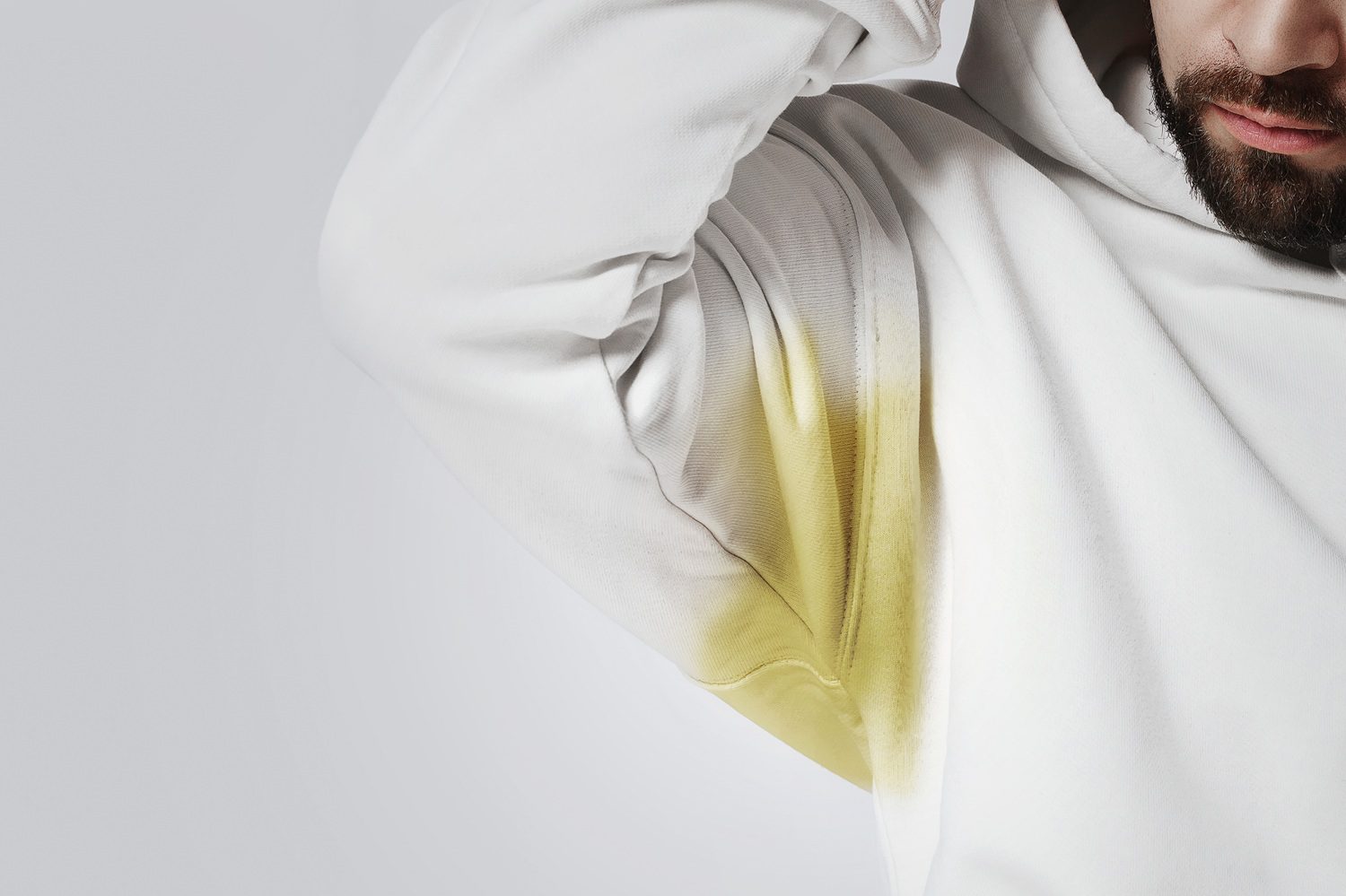
In most cases, yellowing isn’t random or the result of bad laundry habits. Yellow stains often develop slowly and become noticeable only after clothes have been worn or stored for some time. They appear on clean clothes, favorite whites, and light-colored fabrics, leaving you unsure of what caused them in the first place.
It’s a common issue, yet the underlying reason behind it is rarely talked about. To help you better protect your clothes, we explain in this post why white clothes turn yellow, what causes stains to surface, and when dry cleaning is useful.
Body Oils and Sweat That Build Up Gradually
Even when clothes look freshly washed, body oils and perspiration can remain trapped deep within the fabric. These substances accumulate gradually with repeated wear, especially in areas that remain warm and moist throughout the day.
Over time, exposure to air causes this hidden residue to oxidize, leading to gradual yellowing. This is why discoloration can appear long after a garment was last worn, or even after it seemed clean.
How Oils Bond With Fabric Fibers
Body oils naturally cling to fabric fibers and easily penetrate absorbent materials such as cotton and linen. Once they settle in, they are difficult for water-based detergents to fully remove, even after multiple wash cycles.
Over time, these oils tend to:
- Darken as they oxidize
- Attract dirt and leftover detergent
- Become increasingly difficult to remove
This delayed reaction explains why stains often seem to appear unexpectedly. Professional dry cleaning targets these oil-based contaminants directly, rather than spreading them or allowing them to set further into the fabric.
Where Yellowing Starts First
Yellowing usually develops in specific areas rather than across the entire garment. These spots experience the greatest friction, moisture, and skin contact during wear.
Common trouble areas include:
- Shirt collars and necklines
- Underarms and sleeve seams
- Cuffs and areas that rub against the skin
Detergent and Fabric Softener Residue
Using more laundry products does not always lead to cleaner clothes. In fact, excess detergent and fabric softener can cling to fibers rather than rinse away completely. Over time, this residue forms a film that traps oils and dirt beneath the surface. This lingering buildup is a common reason people wonder why white clothes turn yellow despite frequent washing.
Why Residue Attracts Discoloration
Detergent residue does not remain neutral after clothes are dried. It stays slightly tacky, allowing oils and contaminants to accumulate more quickly with each wear.
As residue builds up, it can:
- Dull the brightness of the fabric
- Trap sweat and oils below the surface
- Oxidize into visible yellow discoloration
Fabric softeners can worsen the issue due to their coating effect. Dry cleaning avoids this problem by removing stains without leaving residue.
Simple Adjustments That Make a Difference
Preventing residue is more about consistency than extra effort. Small adjustments can significantly reduce the risk of long-term discoloration.
Helpful habits include:
- Measure detergent accurately
- Avoid using fabric softener on white garments
- Use an extra rinse cycle when needed
Once residue has bonded to the fabric, home laundering may no longer be effective. At that point, heat exposure becomes the next factor that can intensify yellowing.
Heat Exposure from Dryers and Ironing
Heat does not create yellow stains on its own, but it does make them worse. Each pass through a hot dryer or iron strengthens the bond between residue and fabric fibers. Repeated exposure accelerates oxidation and makes discoloration harder to reverse. Over time, once removable stains can become permanent.
How Heat Locks In Stains
When heat is applied to fabric that still contains oils or residue, chemical reactions accelerate. What was once an invisible buildup can quickly become visible staining at high temperatures.
Repeated heat exposure can:
- Deepen yellow tones
- Weaken fabric fibers
- Reduce the effectiveness of future cleaning
This explains why clothes may look fine at first, only to discolor months later. Professional dry cleaning uses controlled finishing methods that minimize unnecessary heat exposure.
Smarter Ways to Use Heat
Heat is sometimes necessary, but it can be used more carefully to protect fabrics.
Better practices include:
- Air-dry light-colored garments
- Avoid ironing over stained areas
- Choose low-heat dryer settings
Improper Storage and Lack of Airflow
Clothing continues to age even when it is not being worn. When garments are stored without adequate airflow, chemical reactions do not stop; they often intensify. Moisture, trapped gases, and leftover contaminants all contribute to slow yellowing. This is why discoloration often appears during long-term storage.
Why Storage Can Trigger Yellowing
Even small amounts of residue left in fabric continue reacting over time. Without airflow, oxidation builds rather than disperses.
Common risk factors include:
- Plastic garment bags
- Humid or poorly ventilated closets
- Acidic cardboard storage boxes
Dry cleaning garments before storage removes the substances that cause delayed yellowing, making it a preventive step rather than corrective.
How to Store Clothes Safely
Proper storage habits help preserve the appearance of fabric over time.
Best practices include:
- Clean garments before storing them
- Use breathable garment covers
- Keep storage areas cool and dry
How Professional Cleaning Helps Prevent and Treat Yellowing
Professional cleaning approaches fabric care differently from home laundering. Instead of relying on water-based agitation, dry cleaning dissolves oils and residues at their source. This makes it effective for both treating existing discoloration and preventing future yellowing. While not every stain can be reversed, early professional care significantly improves results.
What Dry Cleaning Removes Effectively
Dry cleaning is particularly effective where home washing reaches its limits. It targets:
- Body oils and perspiration
- Deodorant and antiperspirant residue
- Detergent and fabric softener buildup
By removing these substances before oxidation occurs, fabrics are more likely to retain their original brightness.
When to Choose Professional Care
Professional cleaning is especially beneficial for:
- White or light-colored garments
- Structured or delicate fabrics
- Clothing intended for long-term storage
Used proactively, dry cleaning helps prevent the root causes behind yellowing. With the right care strategy in place, maintaining brighter, longer-lasting garments becomes far more manageable.
When Yellow Stains Won’t Budge, It’s Time for Omni Cleaners
Not all yellow stains come from a single spill or a bad laundry day. Most of the time, they show up gradually as body oils, detergent residue, and oxidation build up in the fabric, substances home washing often can’t fully eliminate. Once that happens, even repeated washing falls short, especially with white or delicate pieces. Only dry cleaning removes stains correctly.
At Omni Cleaners, we handle this kind of problem every day. Our professional dry cleaning process is designed to remove the oils and buildup standard washing can leave behind, without stressing fibers or changing how a garment fits. With more than 30 years of experience in Houston, full Drycleaning & Laundry Institute (DLI) certification, and environmentally responsible cleaning methods, we take a careful, fabric-first approach to garment care.
If your whites are starting to look dull or you want to stop yellowing before it sets in, schedule your Dry Cleaning Service with Omni Cleaners today. Call 346-560-4852, stop by one of our Houston locations, or let us come to you with our FREE Pickup and Delivery Service.