
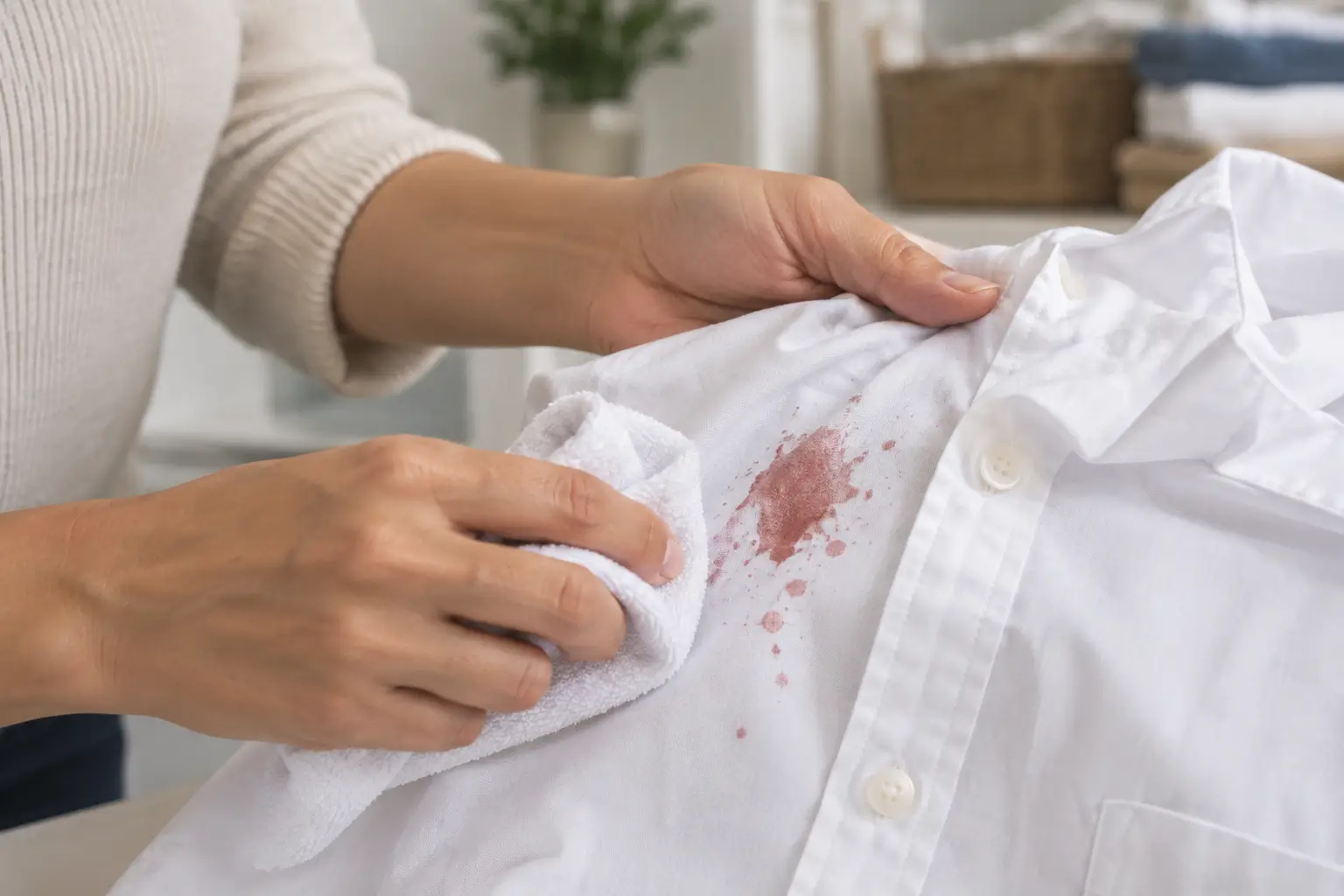
Somewhere between drop-off and pickup, your garment gets maybe five extra minutes that determine if your coffee stain actually comes out or just gets rearranged. That’s the whole gap most customers never think about. It’s not the machine, since every machine runs the exact same cycle on everything inside it. It’s whether or not someone looked at your specific stain first and treated it before the cycle ever started.
What happens in those five minutes, stain by stain, is exactly what this piece walks through using the marks with which you actually deal.
What Pretreatment Is Actually
Pretreatment is the individual attention your garment receives before it joins the general cleaning cycle. A specialist inspects each stain, tests a hidden area of the fabric for colorfastness, and applies chemistry matched to that specific stain type.
None of this happens inside the machine. The machine treats every garment the same way; pretreatment is where the differences between your coffee stain and your neighbor’s ink stain actually get addressed.
Why the Machine Can’t Do This Part
A dry cleaning machine applies one solvent, one temperature, and one cycle length to everything inside it. That works fine for general soil and everyday wear, but a set-in stain needs something more targeted before the cycle starts. If a stain goes into the machine untreated, the solvent can lock it into the fibers instead of lifting it out. Pretreatment exists specifically to prevent that.
This is also why two garments with the exact same stain, dropped off on the exact same day, can come back looking different if one went through pretreatment and the other got rushed straight into the cycle. The machine itself never changes. What changes is whether or not the stain was actually addressed before the machine ever touched it.
What a Specialist Sees That You Don’t
Under the right lighting, a stain tells a story most people can’t read at a glance. A specialist identifies to which family it belongs – protein, oil, tannin, pigment, or ink – because each one reacts to a different type of chemistry. Get the family wrong, and the treatment won’t work, or worse, it sets the stain permanently.
This diagnostic step happens fast, usually in the time it takes to walk your garment from the counter to the back of the shop, but it’s genuinely the moment that determines everything that happens next. A stain misread as oil when it’s actually protein gets the wrong chemistry applied before anyone realizes the mistake.
The Question That Changes Everything
Before treating anything, a good specialist asks how old the stain is and if you already tried to get it out yourself. This isn’t small talk. A fresh coffee spill and a three-day-old coffee stain need different approaches, and if you already hit it with water, club soda, or a stain stick at home, that changes the chemistry underneath. Answering honestly here does more for your outcome than almost anything else in the process.
Pretreatment for Coffee, Tea, and Wine (the Tannin Family)
Coffee, tea, and wine are tannin stains. They need an enzyme-based pretreatment applied before the garment goes into solvent cleaning. Enzymes break down the tannin compounds so the solvent can carry them out instead of just moving them around the fabric.
Why Wine Behaves Differently Than Coffee
Wine carries sugar along with its tannins, which means it can attract soil and darken over time if it sits untreated. That’s why a wine stain that looked faint at drop-off can look worse a day later if it wasn’t pretreated quickly. Coffee and tea are more stable by comparison, but all three respond to the same enzyme-first approach.
Pretreatment for Ballpoint Pen, Printer Ink, and Marker
Ink stains need a specific reducer, not a general-purpose solvent. Ballpoint pen, printer ink, and marker are chemically different from each other, so a specialist has to identify which one you’re dealing with before applying anything.
Why There’s No Single Ink Remover
Ballpoint pen ink is oil-based. Most markers use dye. Printer and toner ink behave more like pigment suspended in a binder. A treatment strong enough to pull marker dye out of fabric can be the wrong choice for ballpoint ink, and vice versa. This is one of the clearest examples of why pretreatment can’t be a one-size-fits-all step.
Pretreatment for Deodorant Yellowing and Underarm Sweat Residue
That yellow tint under the arms of a favorite blouse or dress shirt is aluminum from antiperspirant combined with protein from sweat. It needs enzyme pretreatment to break down before cleaning, similar to tannin stains, but the chemistry is tuned differently for this residue.
Why This One Often Takes More Than One Pass
Underarm yellowing usually builds up over many wears, not one. That means a single pretreatment pass sometimes lightens it without fully clearing it, especially on garments that have been yellowing for months. A specialist who flags this at drop-off is telling you the truth about what to expect, not stalling.
Pretreatment for Food, Oil, and Cosmetic Grease
Food grease, cooking oil, and similar stains respond to surfactants from the same family as dish soap, applied before solvent cleaning breaks down the rest. Surfactants lift oil away from the fibers so the solvent isn’t fighting against it.
Why a Grease Stain Can Reappear After It Looked Gone
Sometimes a stain seems to disappear during pretreatment and then reappears faintly after the full cleaning cycle. This happens when oil trapped deeper in the fibers migrates back to the surface. It’s not a failed treatment. It’s a sign the stain needs a second, more targeted pass, which a specialist can flag before the garment goes home.
Pretreatment for Makeup, Lipstick, and Foundation Transfer
Makeup stains are usually a combination of oil and pigment, which means they need sequential treatment: one step for the oil, another for the pigment left behind. Treating only one half leaves a ghost of the stain even after cleaning.
Why Foundation and Lipstick Need Different Handling
Foundation spreads across a wider area and blends heavily with skin oils, so it often needs a broader oil-focused pass first. Lipstick is more concentrated, waxier, and pigment-heavy, so it responds better to a treatment that targets pigment early. Treating them the same way is a common reason makeup stains don’t fully lift on the first attempt elsewhere.
What Happens When Pretreatment Is Skipped or Rushed
It’ll come out in the wash exactly how a treatable stain becomes permanent. Once a stain enters the main cleaning cycle without pretreatment, the solvent and heat can set it into the fibers instead of removing it. At that point, no amount of re-cleaning reverses it.
This is why a rushed turnaround request on a stained garment is worth a second thought. Pretreatment takes real time for a reason, and skipping it to hit a same-day pickup often means the stain never actually receives the individual attention it needed in the first place.
How to Tell a Stain Has Already Set
A set-in stain usually has a hardened or slightly glazed edge, and it won’t lighten at all when dabbed with water. If a stain looks the same after a previous cleaning attempt as it did before, that’s a sign it was cleaned without proper pretreatment, not that the stain is simply stubborn.
Point Out the Stain – Then Leave It to Omni Cleaners
When a stain goes untreated for too long, it can set beyond what repeated cleaning can fix. What you can control is how soon you do something about it.
At Omni Cleaners, we inspect and pretreat every stain individually before it ever reaches the dry cleaning cycle, so it receives the right treatment while there’s still time to work. We’re fully DLI-certified, and Houston families have trusted us with that kind of care for more than 30 years.
Don’t wait until a stain has time to settle in. Bring it to us now and let us take a real look at it.
Phone: +1 346 560 4852
Email: info@omnicleaners.com